


Osteochondrosis is a degenerative disease of the intervertebral disc and joint tissue.In medicine, the term is often used to refer to a complex process that occurs specifically in the intervertebral disc.Changes in the vertebral body itself are an adaptive mechanism.This may also include limitations in mobility.This is evident as we age.
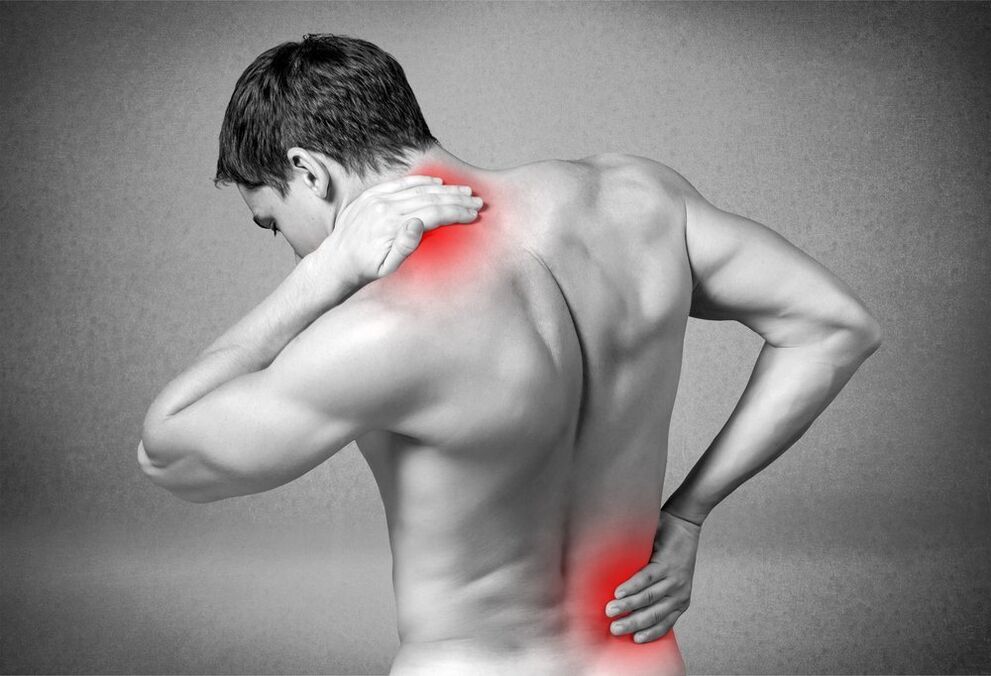
Osteochondrosis can occur in the cervical, thoracic, and lumbar spine.Older people are more susceptible to this disease.But today the disease often occurs in young people.This is caused by a sedentary lifestyle and bad habits: school, computers, cars, being overweight, smoking, drinking, etc.Modern kids prefer computers to playing outside.In this regard, there is insufficient muscle development and poor "nutrition" of the intervertebral disc and surrounding tissue.This also includes modern foods: sweets, carbonated foods, fast food of all kinds, stress, neuroses, etc.According to statistics, osteochondrosis affects about 80% of the world's working population.
What is osteochondrosis
Osteochondrosis is a change in the discs and vertebrae.As a result, the intervertebral disc loses its elasticity, shape, moisture percentage and, over time, its function: ensuring mobility of the spine, shock absorption when lifting heavy objects or other loads.The normal relationship between the discs and vertebrae is disrupted.The length of the spine is shortened, stability is compromised, and spasms may occur in certain muscle groups.Although the latter sometimes acts as a cause rather than an effect.In advanced cases, compression of the nerve endings occurs.Hence the pain.
What I am trying to say is that there is currently no clear answer as to the cause of osteochondrosis.This is believed to be influenced by a number of factors, which will be discussed further.If your doctor's advice is not followed, osteochondrosis can lead to herniation (herniation of part of the disc) and hernia (herniation of part of the disc with rupture of the annulus fibrosus).In the latter case, the contents of the disc enter the spinal canal.Subsequently, as the body attempts to adapt to these changes, bone tissue begins to grow, limiting mobility in the affected area.One cannot bend/straighten as before.
Causes of osteochondrosis
Osteochondrosis occurs for a variety of reasons:
- sedentary lifestyle;
- Improper posture (kyphosis, scoliosis, etc.);
- Unbalanced diet;
- persistent stress and neurosis;
- past infections, viruses and diseases;
- Metabolic disorders;
- latent infection;
- overweight;
- constant load.This also includes sedentary occupations;
- Wearing poor quality or uncomfortable shoes;
- muscle weakness;
- Poor immunity;
- hormonal changes or use of alternative therapies;
- side effects of certain medications;
- Injuried;
- Lack of vitamins and trace elements;
- genetics;
- using uncomfortable pillows and mattresses;
- Bad habits (smoking, alcoholism, drug abuse);
- Professional or extreme sports.
Symptoms of osteochondrosis
Symptoms depend on the location and stage of the disease:
- Cervical osteochondrosis: pain in the neck, head, and arms, squeaking in the ears, stiff movements, numbness in the fingers, floaters or other artifacts in the ears.When arteries are compressed, symptoms such as throbbing headaches, dizziness, hearing loss, and vision loss can occur.Depression or similar conditions, lethargy, and weakness may occur;
- Chest osteochondrosis: chest pain, pain between the shoulder blades in the back, discomfort, possible pain in the heart or other organs, difficulty breathing;
- Lumbar Osteochondrosis: Lower back pain, which can be acute or sore, lower back discomfort, numbness, tingling, loss of sensitivity in the legs, disturbance of internal pelvic organs.
During remission, acute pain subsides, but ongoing pain or discomfort remains.This condition becomes more noticeable after exercising, lifting weights, or being under extreme stress.Symptoms may vary depending on the site and stage and other accompanying illnesses.Therefore, it is important to conduct a thorough inspection.Low back pain can be caused by reproductive and urinary disorders.
Osteochondrosis and the nervous system
Cervical osteochondrosis can cause compression of nerve roots and blood vessels.This not only affects health, but also affects memory, vision, hearing, the central nervous system and the function of internal organs.
Main symptoms of neurological diseases:
- poor sleep;
- irritability;
- Nausea, vomiting;
- Chills or fever;
- Loss of strength;
- Lazy;
- changes in blood pressure;
- Headache.
It is worth noting that such symptoms may be manifestations of neurosis or depression.In this case, it is necessary to contact not only a neurologist, but also a psychotherapist.
diagnosis
In order to diagnose and make an accurate diagnosis, examination by a neurologist and osteopath is required.Depending on your medical history, examinations will be performed: tests, MRI, or X-rays.Once results are received, appropriate treatment will be administered.
What is important to understand is that treatment is very slow and requires the patient to follow a lot of rules.Everything you did before can contribute to the development of the disease: bad habits, reactions to stress, activity, work, nutrition, physical activity, etc.
Treatment of osteochondrosis
Depending on the stage of the disease, first use the following methods to relieve pain:
- Muscle relaxants;
- painkillers;
- Chondroprotectants (depending on symptoms);
- vitamins;
- Vasodilators;
- Drugs that normalize metabolic processes.
Afterwards, physical therapy is performed to strengthen the muscle corset; diet, daily routine, mattress and pillow are recommended.Blood supply and tissue nutrition are also improved due to exercise therapy.In some cases, breathing exercises have a positive effect not only on the spastic muscles, but also on the entire central nervous system.Because osteochondrosis can be caused by long-term stress, depression or neurosis.Additionally, it is recommended to consult a psychotherapist to resolve internal conflicts.
Helper methods
- massage;
- manual therapy;
- Physical therapy (electrophoresis);
- Traction (not for everyone and not always suitable);
- Reflexology.
prevention and prognosis
It is important to understand that everything you have done before can lead to you developing this disease.It is necessary to slowly and gradually change your lifestyle towards health: eat right, engage in exercise therapy, move more (walking is natural from a physiological point of view), relax in nature, avoid or learn to cope with stress (psychotherapist or meditation practice), lose excess weight, monitor your posture.If possible, change your work location or type of activity to eliminate harmful foods: fast food, bacon, canned goods, carbonated drinks, alcohol, smoking, strong coffee, fatty foods, etc.Pay attention to fruits, vegetables, herbs.
Treat your health right; generally speaking, it is a non-renewable resource.Slowly and gradually, the disease can be stopped or eliminated entirely.